Category: Other Musings

  • The Story, Filmmakers and Writers Alike

    Award-Winning Writer/Filmmaker Donald L. Vasicek – Colorado Forest

    Utilizing my writing background, which has proved very helpful
    to me when making a film, I am perplexed about why it is so
    difficult for many filmmakers to put together a coherent story
    in their films. 

    I have no problem with putting together a story, and again, it
    is based on my writing background.  In the conglomeration of
    film, tape, stills, etc., the story is fun to put together.  Even
    if the filmmaker wants to make a non-linear film, it must tell a
    story so that viewers can get a grasp of what the film is.  A
    beginning.  A middle. An ending.  A main theme that holds
    everything together. A compelling subject matter or character
    that goes through a transformational arc in the film.  And, thus, a
    coherent story.

    If the filmmaker who is having difficulty with putting a story
    together, then, the filmmaker should look inside of themselves
    for the story. I mean, the story idea came up. From where did
    it come? Your foot? Maybe your nose? How about your brain
    and heart?  And I don’t mean, to tell a story about yourself,
    unless that is your intention.  I mean, you, the filmmaker and/or
    the writer, should ask yourself questions like, who was I when I
    got the idea for this film?  What was I doing at the precise time
    the idea popped up in my mind?  Where was I? When did I come
    up with this idea?  Why am I making this film?

    If the filmmaker and/or writer writes down the answers to
    these questions, she/he will discover the story. And, I
    emphasize, write down, the answers. Don’t think them down.
    Write them down. By writing them down it will cause thoughts
    to surface in your mind that of which you have no conscious knowledge. 
    The story is about passion. Every story is about passion.
    The passion is inside of the writer and/or filmmaker’s mind and heart. 

    If the passion is slaying a dragon, say being unhappy about the
    way our earth is decaying, then, being unhappy about it
    is the passion. You gotta’ go out and slay that dragon via making
    a film about it or writing a story about it, or both. Identifying and
    understanding your passion for the film, should become the main
    theme for the film.  And so on.

    I hope this sheds some light on an issue that can be very complex,
    if we allow it to be that.

  • “Screenplays, The Third Act”

    Billy Wilder

    Someone, I believe Billy Wilder (“Some Like It Hot”, “The Apartment”,
    “Double Indemnity”, “Sunset Boulevard”), said that “the third act must
    build, build, build.” This means that you must make the tension of
    what your main character is doing to achieve her/his goal go up, up,
    up, like using a corkscrew to open a bottle of wine. The more you
    twist, the tighter the tension in the cork becomes, until something
    gives, the cork breaks, or whoever is screwing in the corkscrew,
    decides it is time to pull out the cork with the corkscrew.

    In other words, make it more and more difficult for
    your main character to achieve her/his goal until
    she/he comes to a point where he/she must either
    give up her/his goal, or, he/she “goes over the top”,
    experiences an epiphany, and accomplishes the
    goal. Each obstacle (difficulty) must be more
    challenging than the last. It’s like putting your
    main character on a tree branch. Her/his
    opposition throws rocks at her/him until the
    branch breaks. Then, he/she falls in a raging
    river. Then, in the river, he/she fights to keep
    from drowning until he/she comes to a roaring
    waterfall. The question is, will she/he, survive
    the waterfall, or not?

    When you have your main character at the “waterfall”
    of your story, then you have your main character
    decide at that point, what she/he has to do to
    survive tumbling over the waterfall. To conquer
    this, the main character must overcome her/his
    greatest fear of accomplishing his/her goal
    throughout the story. If he/she does, then he/she
    experiences an epiphany. He/she faces her/his
    fear and overcomes it.

    Perhaps, instead of tumbling over the waterfall,
    getting battered to death by rocks, and drowning,
    which has been your main character’s primary fear
    that has been keeping her/him from accomplishing
    his/her goal in the story, that of the fear of drowning,
    your main character swims back upstream and saves
    herself/himself.

    This is the last event in the third act. From
    this point forward, wrap up all loose ends
    of your story, send your main character
    to the Olympics as a champion swimmer,
    and end your screenplay.

    I hope this has been of help to you.

    Best Regards,

    Donald L. Vasicek
    OLYMPUS FILMS+, LLC
    The Zen of Writing/Filmmaking/Consulting
    http://michaelc.nextmp.net/wordpress
    dvasicek@earthlink.net
    303-903-2103
    “You must be the change you want to see in the world.”
    – Mahatma Gandhi

  • Award-Winning Documentary To Be Screened

    Award-Winning Documentary To Be Screened

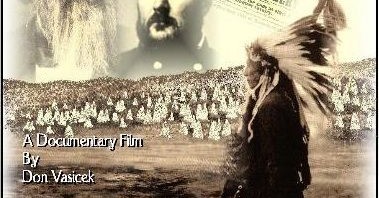
    The Sand Creek Massacre Movie Poster
    The Sand Creek Massacre Film Poster

    For Immediate Release

    Donald L. Vasicek
    Olympus Films+, LLC
    303-903-2103

    dvasicek@earthlink.net
    http://www.sandcreekmassacre.net

    “Award-Winning Sand Creek Massacre film to be Screened at Tribal College Librarians Institute”

    Centennial, CO – May, May 24, 2011 2011 – “The Sand Creek Massacre”, an award-winning documentary film written, directed and produced by award-winning writer/filmmaker Donald L. Vasicek, will be screened at Montana State University.

    “The Sand Creek Massacre”, an award-winning documentary film, will be screened at the Tribal College Librarians Institute on the campus of Montana State University in Bozeman, June 6-10, 2011. The film won Best Native American Film at The American Indian Film Festival in Houston and the Trail Dance Film Festival in Duncan, Oklahoma and best short film in Cleveland at The Indie Film Festival. The story of the Sand Creek Massacre is told on camera by Cheyenne and Arapaho people whose ancestors were at Sand Creek during the massacre. Donald L. Vasicek, award-winning writer/filmmaker, who wrote, directed and produced the film via his film company, Olympus Films+, LLC, said, “This film is vital to inform, to educate, and to create awareness, for not only the Cheyenne and Arapaho people, but for all of the indigenous people in America. It helps neutralize ignorance and fear of cultures without the exposure to which most Americans have grown accustomed.”

    The film has been screened at colleges and universities throughout the United States and in Europe in addition to various Native American and minority rights organizations and groups. It has also been aired in Philadelphia, Houston, Dallas, Los Angeles, and Phoenix. It is being distributed in North America and Asia by Films Media Group.

    Olympus Films+, LLC was founded by Donald L. Vasicek in 1993. It has produced such films as “Faces”, a documentary film about who gays and lesbians really are, and “Oh, The Places You Can Go…”, a documentary film about kids with special needs in transition.

    # # #

    Donald L. Vasicek
    Olympus Films+, LLC
    The Zen of Writing
    http://michaelc.nextmp.net/wordpress
    dvasicek@earthlink.net
    303-903-2103